From Code to Cure: Autonomous FDA & IEC 62304 Compliance
Accelerate Your 510(k) Submission. Eliminate Verification Fatigue.
TimeZero is the world’s first Autonomous Functional Safety Engineer for the medical device industry. We automate the rigorous testing and documentation required for IEC 62304 Class C and FDA Software Validation, allowing you to focus on patient outcomes while we handle the regulatory burden
The FDA has identified a critical failure in the medical device software lifecycle: Lack of Repeatability
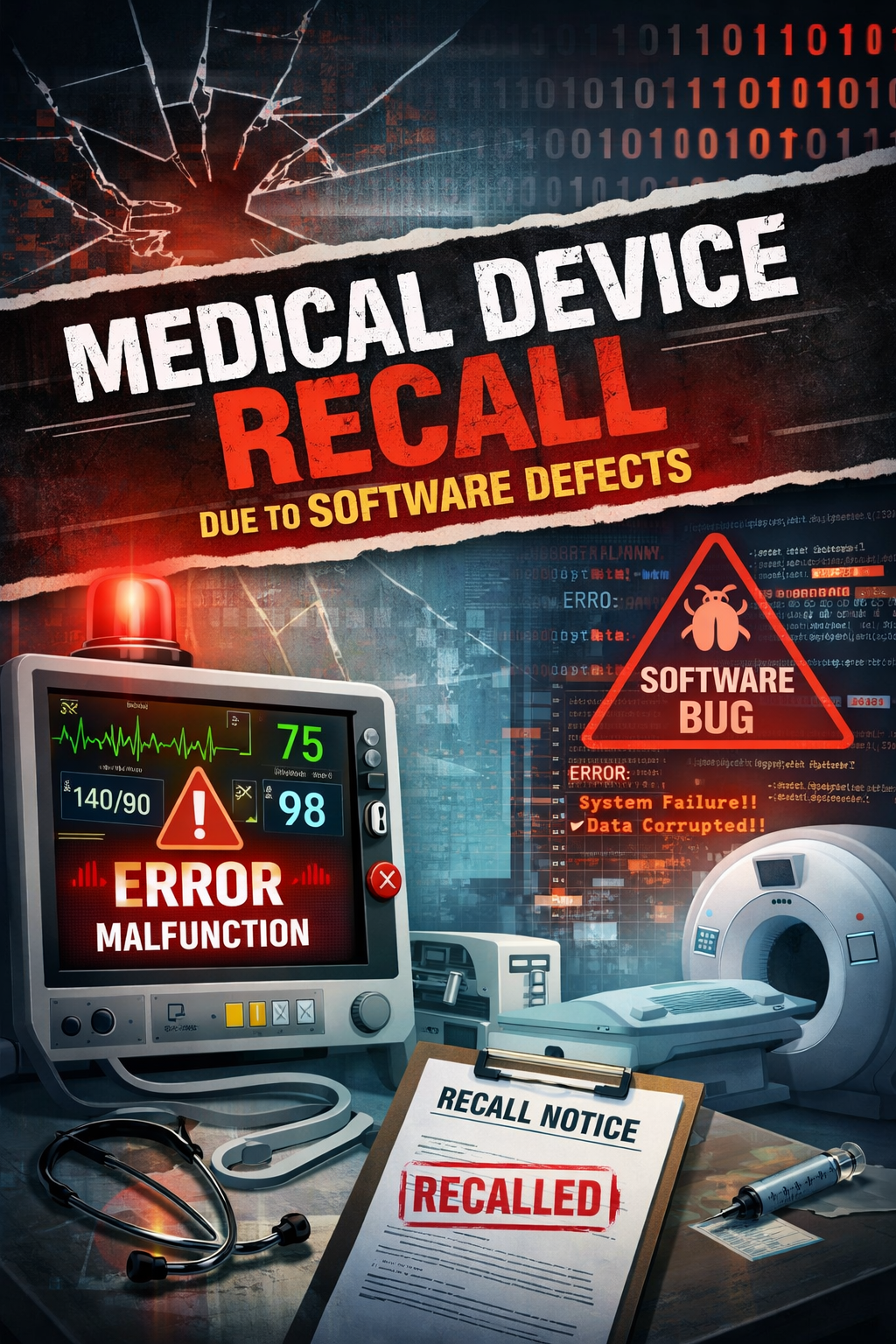
The "Recall Crisis" in Medical Software
The 79% Statistic: FDA analysis reveals that 79% of software-related recalls are caused by defects introduced when changes were made to the software after its initial production. Regression testing is failing
The Documentation Burden: Creating the Design History File (DHF) manually is slow and prone to inconsistencies. A single "orphan" requirement can delay FDA approval by months.
Legacy Architectures: As devices become connected (IoMT), legacy codebases ("Spaghetti Code") make validating new features nearly impossible without full re-engineering
TimeZero addresses the specific guidelines set forth in the FDA General Principles of Software Validation and IEC 62304, automating the V-Model from design to release
IEC 62304 Class C Lifecycle Automation
Whether your device is Class A (No injury), B (Non-serious injury), or C (Death/Serious injury), TimeZero scales the verification effort automatically
Class C Rigor
For life-critical devices, TimeZero automates unit implementation verification, integration testing, and system testing as required by IEC 62304 Sections 5.5–5.7
Dynamic Traceability
We automatically map requirements to code and test results. If a test fails, the impact on the patient safety risk classification is immediately flagged
Connect your code directly to your risk analysis to prevent the "Lack of Repeatability" that causes 79% of recall
Risk Management (ISO 14971) & Recalls
Living DHF
Instead of a static document, your Design History File becomes a living asset.
Automated Regression Testing
TimeZero ensures that a change in one module does not break safety mechanisms in another, specifically addressing the FDA's primary concern regarding software changes
FDA-Grade Architecture Analysis (DSM)
The FDA guidelines state: "Appropriate consideration of software architecture... can reduce the magnitude of future validation efforts"
Prevent Erosion
TimeZero uses Dependency Structure Matrix (DSM) technology to visualize your software architecture and prevent "Spaghetti Code"
Modular Validation
By enforcing strict layering and modularity, TimeZero allows you to validate only the changes (delta validation) rather than re-testing the entire system, drastically reducing regression testing time
Use cases
Infusion Pumps Use Case
IoMT Use Case
Stop the Recall Cycle Before It Starts. Automate your path to FDA approval with the platform built for Class C safety.